 Artificially generated image
 Guide to an 8-Day All-Inclusive Ireland Tour Package
An 8-day all-inclusive Ireland tour can turn a complicated holiday into a clear, enjoyable journey through lively cities, coastal roads, historic ruins, and village pubs. For many travelers, especially first-time visitors, bundling transport, hotels, key meals, and guided sightseeing removes the hardest planning decisions before the trip even begins. It also makes it easier to compare value, control timing, and spend more energy on the landscape than on logistics. This guide explains how these packages work, what a sensible itinerary looks like, and how to choose one that matches your budget, pace, and interests.
Outline: this article covers what an 8-day package usually includes, a realistic day-by-day route, the differences between coach, small-group, and private formats, the hidden details that affect value, and final advice on season, packing, and booking.
1. What an 8-Day All-Inclusive Ireland Tour Package Usually Includes
The phrase all-inclusive can sound wonderfully simple, but in travel it rarely means the same thing across every operator. In Ireland, an 8-day package usually includes accommodation for seven nights, ground transportation between major stops, daily breakfast, some dinners, a guide or tour manager, and entry to a selection of well-known attractions. Flights are often not included unless the package specifically says so. Airport transfers may be included on scheduled arrival windows, but not always. That is why the first rule of smart booking is this: read the inclusion list before you read the glossy adjectives.
A strong package normally combines convenience with a route that makes geographic sense. Ireland may look compact on a map, yet narrow roads, scenic detours, and weather can make short distances feel longer than expected. A good operator understands this and avoids stuffing too many major regions into one week. Most practical 8-day tours focus on Dublin and the south or west, rather than trying to cover every famous landmark on the island.
A typical package often includes elements like these:
• 7 nights in hotels or country house accommodations
• daily breakfast and 2 to 5 group dinners
• coach or minibus transport between destinations
• a professional driver-guide or separate guide and driver
• entry to selected landmarks such as the Cliffs of Moher, Blarney Castle, or a heritage estate
• guided city orientation in places like Dublin, Galway, Cork, or Killarney
Some higher-priced tours add more polish: porterage, welcome drinks, evening entertainment, or upgraded hotel categories. Others keep the price lower by using standard three-star hotels outside city centers and making several dinners optional. Neither approach is automatically better. It depends on the traveler. If you value free evenings and independent restaurant choices, fewer included dinners may actually suit you. If you prefer predictability after a long day on the road, built-in meals can reduce effort and surprise costs.
These tours appeal especially to first-time visitors, older travelers, solo guests who want a social structure, and couples who prefer not to drive on the left. Ireland rewards slow observation: sheep scattered across stone-walled fields, Atlantic light shifting over cliffs, and villages where music seems to drift naturally from pub doors at dusk. An organized package will not create that atmosphere for you, but it can clear away enough practical friction for you to notice it more fully.
2. A Realistic 8-Day Ireland Itinerary: What You Can Actually See Without Rushing
One of the biggest strengths of an 8-day package is that it imposes realism. Travelers planning on their own sometimes try to fit Dublin, Galway, Kerry, Cork, Belfast, Donegal, and the Giant’s Causeway into a single week, which looks exciting on paper and exhausting in practice. A balanced itinerary usually chooses one broad corridor and explores it well. For many packages, that means Dublin plus the west and southwest of the Republic of Ireland.
A sensible day-by-day structure might look like this:
• Day 1: arrive in Dublin, hotel check-in, welcome meeting, light city orientation
• Day 2: fuller Dublin touring, with highlights such as Trinity College area, Georgian streets, or a historic distillery or cathedral visit
• Day 3: travel west toward Galway, perhaps via a monastic site or the River Shannon region
• Day 4: explore Connemara or Galway city, depending on tour style
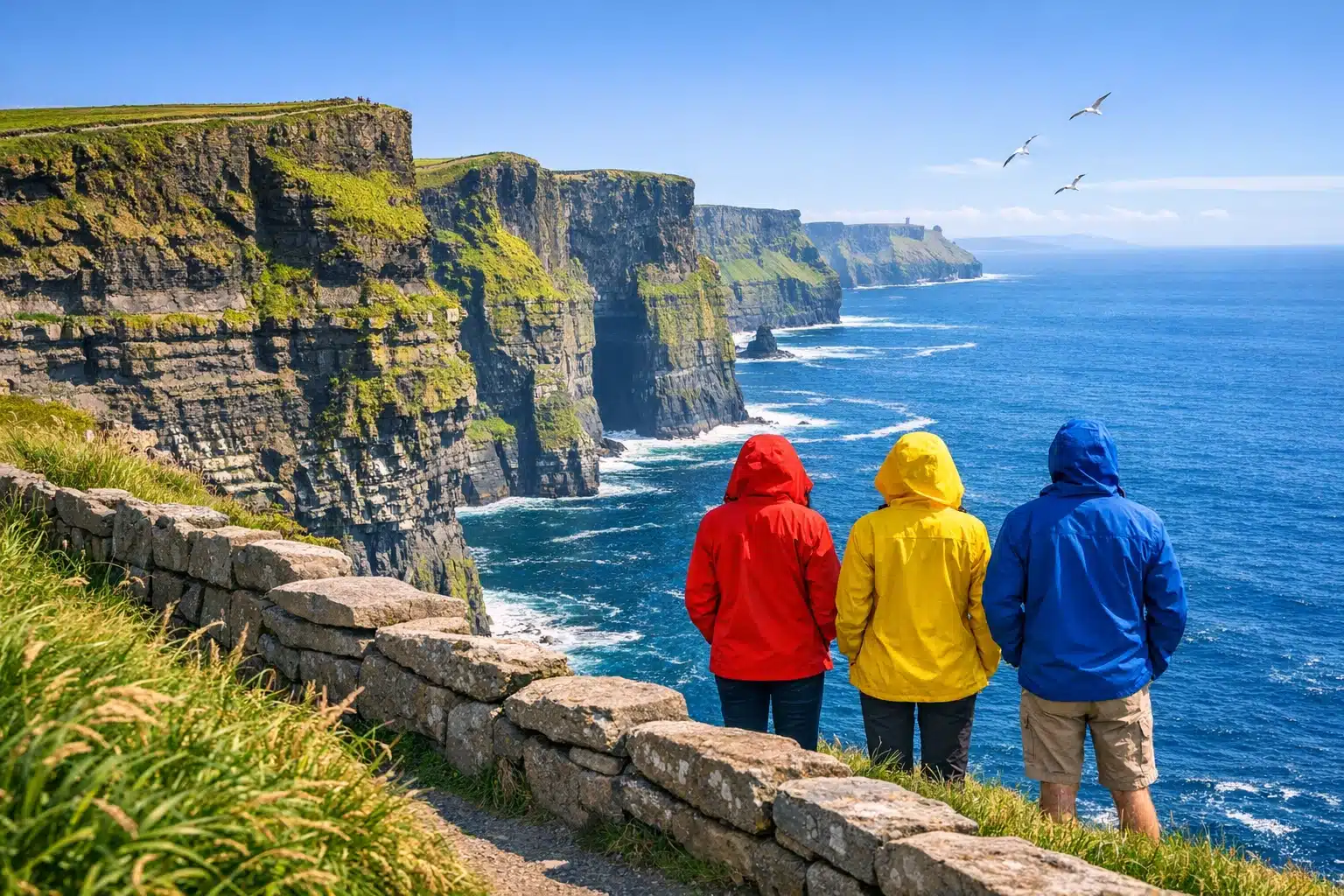
• Day 5: head south through the Burren and visit the Cliffs of Moher, where the highest points rise to about 214 meters above the Atlantic
• Day 6: continue toward Killarney or County Kerry, often with a scenic drive segment
• Day 7: Ring of Kerry or Dingle Peninsula excursion, plus a farewell dinner
• Day 8: return toward Dublin or depart from Shannon, Cork, or Dublin depending on the package design
This layout works because it balances movement days with exploration days. Dublin gets enough time to feel like more than an arrival zone. Galway serves as a comfortable base for the west, whether your interests lean toward music, food, harbor views, or rugged landscapes. Clare and Kerry deliver the classic postcard material, but at their best they offer more than scenery. The Burren’s limestone landscape feels almost lunar in places, while Kerry’s roads reveal lakes, mountains, and changing weather in quick succession, like a film reel edited by the sky.
Some tours substitute Cork for Galway or include an overnight in Limerick. Others build in cultural stops such as sheepdog demonstrations, traditional music evenings, or visits to family-run farms. These additions can be worthwhile when handled respectfully and not treated as caricatures of Irish life. A package becomes more memorable when it mixes iconic sites with local texture. The goal is not simply to check landmarks off a list, but to create a rhythm: city, countryside, coast, conversation, and enough breathing room to absorb the place.
3. Coach Tours, Small-Group Trips, and Private Packages Compared
Not all 8-day Ireland tours feel the same, even when they visit similar regions. The format of the trip shapes the pace, comfort level, social atmosphere, and overall cost. Most packages fall into three broad categories: standard escorted coach tours, small-group tours, and private or tailor-made journeys. Choosing among them is less about prestige and more about travel personality.
Escorted coach tours are usually the most economical. They often carry 30 to 50 passengers and follow a fixed schedule with clearly timed stops. This model works well for travelers who value efficiency, lower per-person pricing, and a traditional guided experience. Because costs are shared across a larger group, these tours can include several admissions and dinners without pushing the price too high. The trade-off is flexibility. If the group leaves a viewpoint at 10:15, it leaves at 10:15. That can feel comforting or restrictive, depending on your temperament.
Small-group tours typically use minibuses and travel with perhaps 8 to 16 guests. These trips usually cost more, but they offer a different texture. Smaller vehicles can reach tighter scenic roads more easily, loading times are shorter, and guides can adapt the day a bit more freely. Travelers often find conversation easier in this setting, which matters if you are joining solo. In Ireland, where storytelling and local context add so much to the experience, a more intimate format can make the difference between being transported and feeling genuinely engaged.
Private tours sit at the top end of the pricing range and suit travelers who want complete control over route, pace, or accommodation level. Families celebrating an anniversary, multi-generational groups, and couples with specific interests often prefer this format. The benefits are obvious: later starts, curated meals, flexible detours, and time spent where you care most. The downside is price. A private 8-day journey can cost substantially more than a seat on a coach tour, even when the hotel quality is similar.
As a broad comparison, travelers often find:
• coach tours offer the strongest value per included feature
• small-group trips offer the best balance between structure and flexibility
• private packages offer the best personalization, but at a premium
There is also the social question. Larger tours can create lively dinner tables and easy introductions. Smaller tours often build stronger group chemistry. Private travel, of course, gives you privacy but less built-in community. None of these styles is inherently superior. The right choice depends on whether you want independence, camaraderie, certainty, or customization. Ireland itself can enchant under any format; the trick is choosing the version that lets you enjoy the country rather than constantly adjusting to the trip style.
4. Reading the Fine Print: Cost, Value, and the Extras Many Travelers Miss
A package can look affordable at first glance and still become expensive once hidden costs emerge. That is why value matters more than headline price. Two Ireland tours may both advertise eight days, but one may include four dinners, several admissions, hotel taxes, and a centrally located Dublin stay, while another leaves nearly every evening meal and major ticket as an add-on. Comparing these offers only by total price is like comparing raincoats by color while ignoring the weather.
Start with the biggest variables. Hotel category matters, but so does location. A four-star property far outside a town center may be less convenient than a very good three-star hotel within walking distance of shops and restaurants. Meals matter too. Daily breakfast is standard on most tours, but lunch is usually independent and dinners vary widely. If your package includes only breakfast, budget carefully for restaurant meals, especially in Dublin or tourist-heavy areas during peak season.
Look closely at the cost structure around these items:
• admissions: are major attractions included or optional
• transfers: do airport pickups run on your schedule
• single supplement: solo travelers often face a sizable extra charge
• tips: some packages include driver-guide gratuities, many do not
• optional excursions: music nights, castle banquets, boat trips, or whiskey tastings can raise the total noticeably
• luggage handling: useful for some travelers, irrelevant for others
Season also changes price dramatically. Summer departures, especially June through August, often command the highest rates because of demand and longer daylight. Shoulder seasons such as April, May, September, and early October can offer a strong middle ground, with decent weather, fewer crowds, and somewhat lower pricing. Winter can be cheaper, but daylight is shorter and some attractions or services may run on reduced schedules.
If your route crosses into Northern Ireland, remember that currency may become a practical issue. The Republic of Ireland uses the euro, while Northern Ireland uses pound sterling. Many travelers manage with card payments, but it is still helpful to know where you are crossing and whether cash will be useful for smaller stops.
The most reliable question to ask is simple: what would this trip cost if I booked it piece by piece? When travelers total hotels, rail or coach links, attraction entry, transfers, and the value of guided support, a package often looks more competitive than expected. The best package is not the cheapest. It is the one whose inclusions align closely with the way you actually travel.
5. Best Time to Go, What to Pack, and Final Advice for Choosing the Right Tour
Ireland has a talent for changing moods in a single afternoon. Sun can flash across a bay, clouds can roll in over a mountain, and a soft mist can make an old abbey look as though it has quietly stepped out of another century. That changing weather is part of the country’s appeal, but it also means your season and packing choices matter more than many first-time visitors expect.
For many travelers, the most comfortable times for an 8-day tour are late spring and early autumn. May and September are especially popular because they often balance moderate temperatures, manageable crowd levels, and good touring conditions. Summer offers the longest daylight, which is excellent for scenic driving days and evening strolls, yet it also brings the highest prices and busier attractions. Winter can be atmospheric and less crowded, particularly in cities, but rural schedules may be quieter and some coastal days can feel short due to limited daylight.
Packing well for Ireland is less about bulk and more about layering. A practical packing list usually includes:
• a waterproof jacket rather than a heavy umbrella
• comfortable walking shoes with decent grip
• layers such as light sweaters and breathable tops
• one slightly smarter outfit for group dinners or city evenings
• a day bag for water, camera, medications, and small purchases
• power adapters suited to Irish and UK sockets if your trip includes Northern Ireland
When booking, read the pace of the itinerary as carefully as the destination list. Ask yourself a few honest questions. Do you enjoy early starts? Are you comfortable changing hotels several times in a week? Would you rather spend two nights in one region than touch three regions briefly? A well-designed tour should match your energy, not test it unnecessarily.
It also helps to examine cancellation terms, deposit rules, and whether travel insurance is expected or included. If mobility is a concern, ask direct questions about steps, walking distances, and coach access rather than assuming the word guided means effortless. If food is important to you, check whether dinners are fixed menus, buffet style, or independent. Small practical details often determine whether a trip feels smooth or frustrating.
For the target traveler, especially someone visiting Ireland for the first time, an 8-day all-inclusive package can be an excellent middle path between complete DIY planning and overly rigid travel. It offers structure where structure is helpful, while still leaving room for the unexpected pleasures that make Ireland memorable: a pub session that runs later than planned, a sudden patch of sunlight on a ruined tower, a conversation with a guide that changes how you see the landscape. Choose a route that does not overreach, a format that suits your personality, and inclusions that reflect your real spending habits. Do that, and the trip is far more likely to feel like a journey rather than a checklist.