 Artificially generated image
 2026 Europe Hidden Towns Guide: Secret Villages Locals Still Keep Quiet
Europe’s famous capitals and postcard villages still deserve their reputation, but 2026 is shaping up to be a strong year for travelers who want quieter lanes, slower meals, and places that have not been polished into stage sets for mass tourism. Hidden towns matter because they offer a sharper view of local life, spread visitor spending more evenly, and create the kind of memories that arrive gradually rather than all at once. This guide looks beyond the obvious map pins to show how to find these places, what makes them special, and how to visit without flattening the very character that makes them worth the trip.
Why Hidden Towns Matter in 2026 and What This Guide Covers
Travel in Europe has entered a more thoughtful phase. The old formula, fly into a famous city, rush through a checklist, queue for a photo, and move on, still exists, but it no longer satisfies everyone. Many travelers now want places that feel textured rather than optimized. They want bakery windows that serve residents first, public squares where conversations are in the local language, and streets that do not seem arranged for social media angles alone. That shift makes hidden towns especially relevant in 2026.
There are practical reasons for this change. Overtourism remains a live issue in major hubs and high-profile villages, with pressure on housing, infrastructure, and daily life. Smaller towns can offer a more balanced alternative, particularly when visitors stay longer, travel in shoulder season, and spend money locally. Better rail links, improved regional bus systems, and more detailed mapping tools have also changed what “remote” means. A village that once seemed hard to reach can now be part of a realistic itinerary, especially for travelers willing to trade speed for atmosphere.
Hidden towns are not necessarily unknown. In many cases, they are places regional travelers know well, while international visitors pass them by for a headline destination nearby. That distinction matters. The point is not to chase secrecy for its own sake. The point is to find towns where daily rhythms still set the tone. In these places, the church bell, the weekly market, and the café terrace still shape the day more than the arrival of tour buses.
This guide is structured to help you do that well. It looks at both the romance and the reality of quieter European villages.
- First, it defines what makes a town genuinely under the radar rather than merely trendy.
- Next, it compares regions, showing how hidden villages differ across southern, western, central, and eastern Europe.
- It then highlights specific places that reward a detour, not because they are perfect, but because they feel distinct.
- Finally, it explains how to plan a 2026 trip responsibly, so your visit supports local life instead of distorting it.
Think of this as a guide for travelers who prefer substance over spectacle. If the sound of cutlery from a family-run inn appeals more than a crowd gathered around a famous viewpoint, you are in the right place.
How to Recognize a Truly Hidden Town Instead of a Marketed “Secret” Destination
The phrase hidden gem is overused, and by 2026 many places marketed as secret are anything but. Some villages appear in every travel reel, every ranking list, and every weekend itinerary, yet still get described as undiscovered. A useful hidden-towns guide needs better standards. The first test is simple: does the place still function primarily as a community rather than as a tourism product? If bakeries, pharmacies, schools, repair shops, and everyday services remain visible in the center, that is often a good sign. If nearly every street-facing business sells souvenirs or identical photo props, the town may already be deep into tourism theater.
A second marker is the pattern of visitor flow. Truly quieter towns often have uneven, local rhythms. They may fill up during a festival weekend, a harvest event, or a Sunday lunch period, then settle quickly back into normal life. Popular showcase villages, by contrast, can feel continuously crowded from late morning until sunset throughout the high season. The difference is not always about beauty. It is about volume and purpose. One place is visited because it fits a trend; the other is visited because it belongs to a region and still serves it.
Accessibility is another clue. Towns that require one extra train change, a regional bus, or a short drive from a better-known base tend to remain quieter than places directly linked to major airport routes or cruise circuits. That does not mean they are difficult. It means they ask for a little intention. In practice, that extra layer often filters out rushed tourism and rewards travelers who are willing to slow down.
When comparing villages, it also helps to examine what is being preserved. Some places preserve façades. Others preserve habits. The latter is usually more compelling. A preserved façade may give you attractive photos; a preserved habit gives you market days, seasonal dishes, local crafts, and a pace shaped by weather and work. That is where genuine travel value lives.
Use a short checklist when evaluating a destination:
- Are there resident-focused businesses in the center?
- Can you still see local traditions outside staged performance times?
- Does the place have off-peak quiet hours, or is it crowded all day?
- Is the nearby famous destination absorbing most international attention?
- Would you still want to spend a night there if you never posted a photo of it?
If the answer to that last question is yes, you may have found the right town. Hidden travel is not about withholding information. It is about choosing places that still have enough self-possession to remain themselves after you arrive.
Southern and Western Europe: Sunlit Stone, Hilltop Silence, and Villages Worth the Detour
Southern and western Europe contain some of the continent’s most photographed landscapes, which makes their quieter towns easy to overlook. Yet this is where some of the strongest alternatives to crowded classics can be found. In Portugal, Spain, and Italy especially, a short deviation from a headline route can take you from busy landmark culture into places where daily life unfolds at a softer volume.
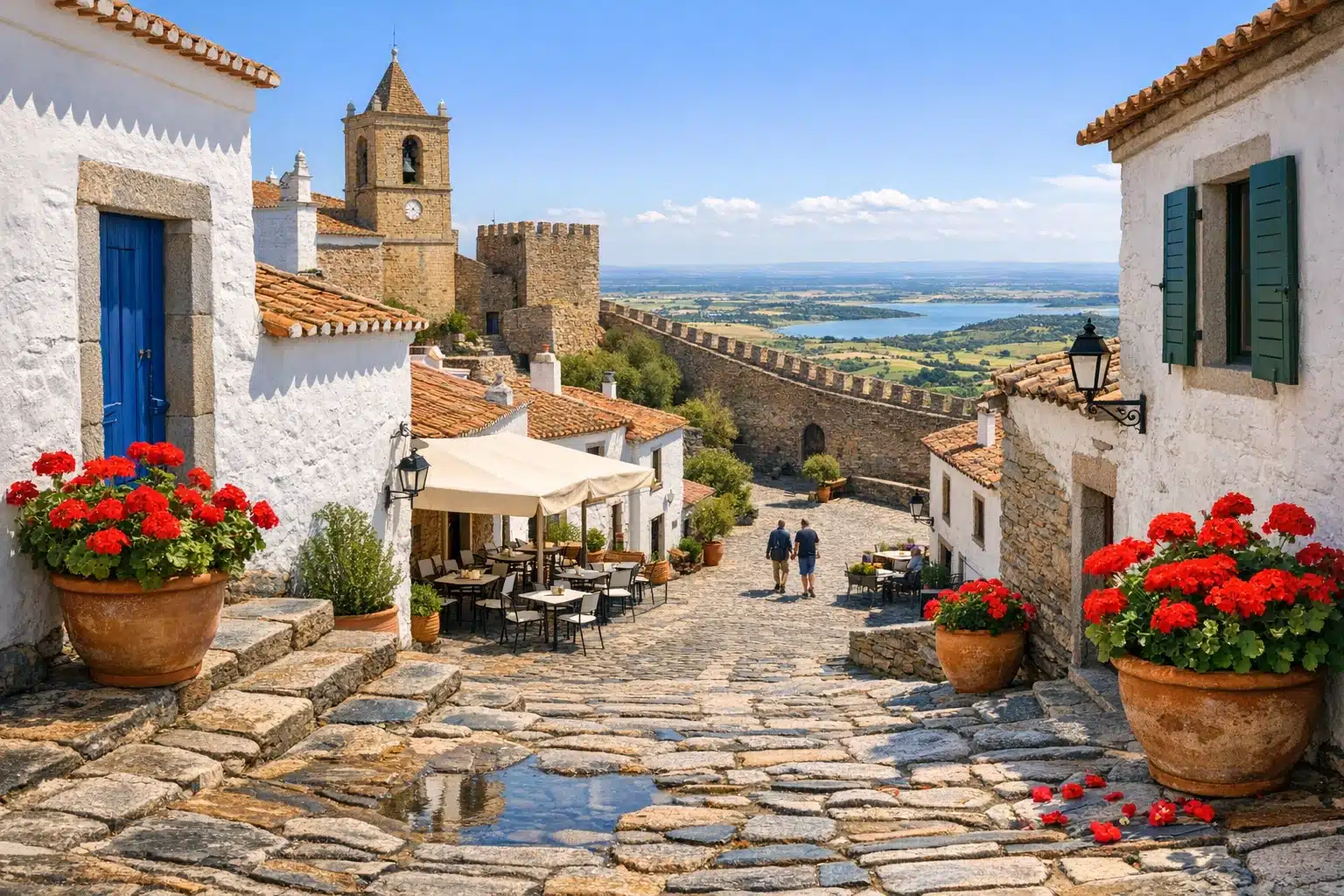
Monsaraz in Portugal is a fine example. High above the Alentejo plain, this walled village feels less like a performance and more like a lookout with a memory. Whitewashed houses, narrow lanes, and broad views over the surrounding landscape give it immediate visual appeal, but the deeper charm lies in its pacing. Unlike Lisbon’s busiest districts or the most publicized hill towns in southern Europe, Monsaraz often rewards slow walking more than frantic sightseeing. One night here changes the experience entirely. By late afternoon, when day visitors thin out and the light turns honey-colored against the stone, the village shifts from attractive to quietly magnetic.
In Spain, Albarracín offers another kind of beauty. Often praised by domestic travelers but still less internationally saturated than places such as Toledo or Ronda, it rises in reddish stone above a dramatic landscape in Aragón. Its medieval fabric is strong, but what makes it memorable is the way the terrain and architecture work together. The streets are not simply picturesque; they are shaped by the land, twisting and climbing with a kind of stubborn elegance. Cafés and small accommodations here often feel more personal than polished, which suits the town. Albarracín is not trying to impress you every second. It assumes you will notice.
Italy’s Cervo, on the Ligurian coast, is especially useful for travelers drawn to the atmosphere of Cinque Terre but wary of its crowd levels. Cervo has sea views, a compact historic core, and enough artistic character to feel layered rather than merely scenic. It does not replace the famous coastline, and it should not be sold that way. The comparison works because Cervo offers some of the same pleasures, stone streets, coastal light, old façades, lingering lunches, while preserving more breathing room. The difference is not a lack of beauty. It is the presence of calm.
If you are building a route through this part of Europe, keep a few principles in mind:
- Stay overnight whenever possible; hidden towns reveal more after day-trippers leave.
- Travel in late spring or early autumn for better weather and lighter foot traffic.
- Pair one famous anchor city with one smaller base to balance convenience and atmosphere.
The great gift of southern and western hidden towns is contrast. A morning may begin in heat and bright stone, continue through a lunch that stretches naturally, and end in a square where the loudest sound is chairs being folded away. That kind of quiet is not empty. It is full of local life.
Central and Eastern Europe: Villages with Strong Identity, Craft Memory, and More Space to Breathe
Central and eastern Europe are often approached through capital cities and a few heavily promoted heritage centers. That leaves many smaller towns underexplored, even though they preserve some of the region’s most distinctive architecture, craft traditions, and rural landscapes. For travelers in 2026, this part of Europe can offer a particularly strong balance of cultural depth, manageable costs, and lighter crowds, provided expectations are realistic. These are not theme parks preserved in amber. They are communities shaped by complex histories, migration, restoration efforts, and changing local economies.
One of the most interesting places to consider is Vipavski Križ in Slovenia. Tiny, walled, and easy to miss if you stay focused on the country’s best-known alpine and lake destinations, it sits in the Vipava Valley with a scale that encourages careful observation. The lanes are short, the architecture restrained, and the surrounding wine region adds another layer of appeal. Compared with Slovenia’s high-profile stops, Vipavski Križ feels more intimate and less performative. It works especially well for travelers who value atmosphere over quantity of attractions. You do not come here to conquer a checklist. You come to notice stone, shade, shutters, and the way the valley air changes late in the day.
Hollókő in Hungary, a UNESCO-listed village, is better known in heritage circles than in mainstream international itineraries. Its traditional Palóc character gives it a strong identity, and that can be both its strength and its challenge. Because it is preserved so carefully, visitors sometimes arrive expecting a static museum village. In reality, the experience depends heavily on timing. On cultural event days, Hollókő can feel festive and concentrated; on quieter days, its appeal is subtler. The lesson is important: hidden towns are not always dramatic on command. Some require patience and context.
In Romania, Viscri has become more visible over the years, yet it still represents the type of village many travelers say they want and rarely make time for. Set among Saxon heritage landscapes, it offers fortified church architecture, rural texture, and a stronger link between place and landscape than many better-known urban heritage stops. It is not untouched, and that is worth saying clearly. Visibility changes villages. Still, Viscri remains a compelling example of how restoration, local enterprise, and careful tourism can coexist more successfully than in places overwhelmed by volume.
Across the region, several comparisons stand out:
- Prices for food and lodging are often gentler than in western European hotspots, though quality varies more widely.
- Public transport can be excellent in cities but thinner in rural areas, making planning more important.
- Village identity is often tied to language, religion, agricultural patterns, and historical border shifts, not just architecture.
What makes these towns memorable is not that they are frozen in the past. It is that the past still has visible weight there. You feel it in church towers, workshop doors, old farm layouts, and community calendars. Travel here rewards curiosity more than speed.
Planning a Hidden-Towns Journey in 2026 Without Turning It into Another Crowded Circuit
Finding a quieter village is only half the task. The other half is visiting in a way that preserves the qualities you came for. That matters even more in 2026, when travel planning tools make under-the-radar places easier to discover and just as easy to overexpose. A good hidden-towns itinerary is not built like a conquest map. It is built like a conversation, with pauses, adjustments, and room for places to speak in their own tempo.
Start with geography. Rather than hopping across the continent for isolated village stays, choose one region and go deeper. Pair a major arrival point, such as Madrid, Lisbon, Ljubljana, Budapest, or Florence, with one or two smaller bases within reasonable rail or driving distance. This lowers transport friction and gives you more time on the ground. It also reduces the temptation to treat villages as collectible scenery. The slower you move, the more these places stop feeling like backdrops and start feeling like settlements with their own internal logic.
Timing is equally important. Shoulder season remains the smartest window for this style of travel. Late April through early June and September through mid-October often provide a strong mix of open businesses, comfortable weather, and fewer day-trip spikes. Winter can be deeply atmospheric in some places, but services may be limited. Summer brings longer days, yet also greater pressure on accommodation, parking, and local infrastructure. In a small town, one full guesthouse can change the whole feel of a visit.
Spend with care. Hidden towns benefit most when money reaches local hands rather than disappearing into distant platforms and chains. Book family-run inns where possible, eat regional dishes, buy from working artisans instead of generic souvenir outlets, and stay at least one night. Day-trippers consume space; overnight guests usually contribute more meaningfully. Even simple habits matter. Greet people. Ask before photographing homes or workshops. Respect quiet hours. Learn a few local phrases. In small places, courtesy is not decorative. It is part of the exchange.
A practical checklist helps keep your trip grounded:
- Verify transport schedules directly, especially for weekend buses and seasonal routes.
- Carry some cash, since small rural businesses may prefer it or have limited card systems.
- Check local festival calendars before booking; they can either enrich your stay or strain availability.
- Pack for uneven streets and changing weather rather than for urban convenience.
- Leave room for unplanned time, because the best moments often arrive between landmarks.
The deepest pleasure of hidden-town travel is that it resists optimization. You may remember a view, certainly, but you are just as likely to remember a bakery at 8 a.m., a conversation in broken shared vocabulary, or the way evening settles over a square after the dishes are cleared. That is not a lesser travel experience than the famous route. Often, it is the one that lasts longer.
Conclusion for Curious 2026 Travelers
If you are planning a European trip in 2026 and feel less excited by queues than by texture, hidden towns offer a satisfying alternative. They are not automatically better than famous destinations, but they often provide what the busiest places struggle to keep: proportion, local rhythm, and a sense that life continues whether visitors arrive or not. The best approach is not to chase secrecy as a status symbol. It is to travel with enough patience to notice where authenticity still survives in ordinary routines, small businesses, regional food, and unhurried streets.
For curious travelers, the payoff is substantial. A well-chosen village can deepen your understanding of a whole region, often more effectively than a fast stop in a major city center. Pick fewer places, stay longer, compare carefully, and let the quieter corners of Europe reveal themselves on their own terms. When you do, the trip becomes less about collecting proof that you were there and more about recognizing why the place matters at all.