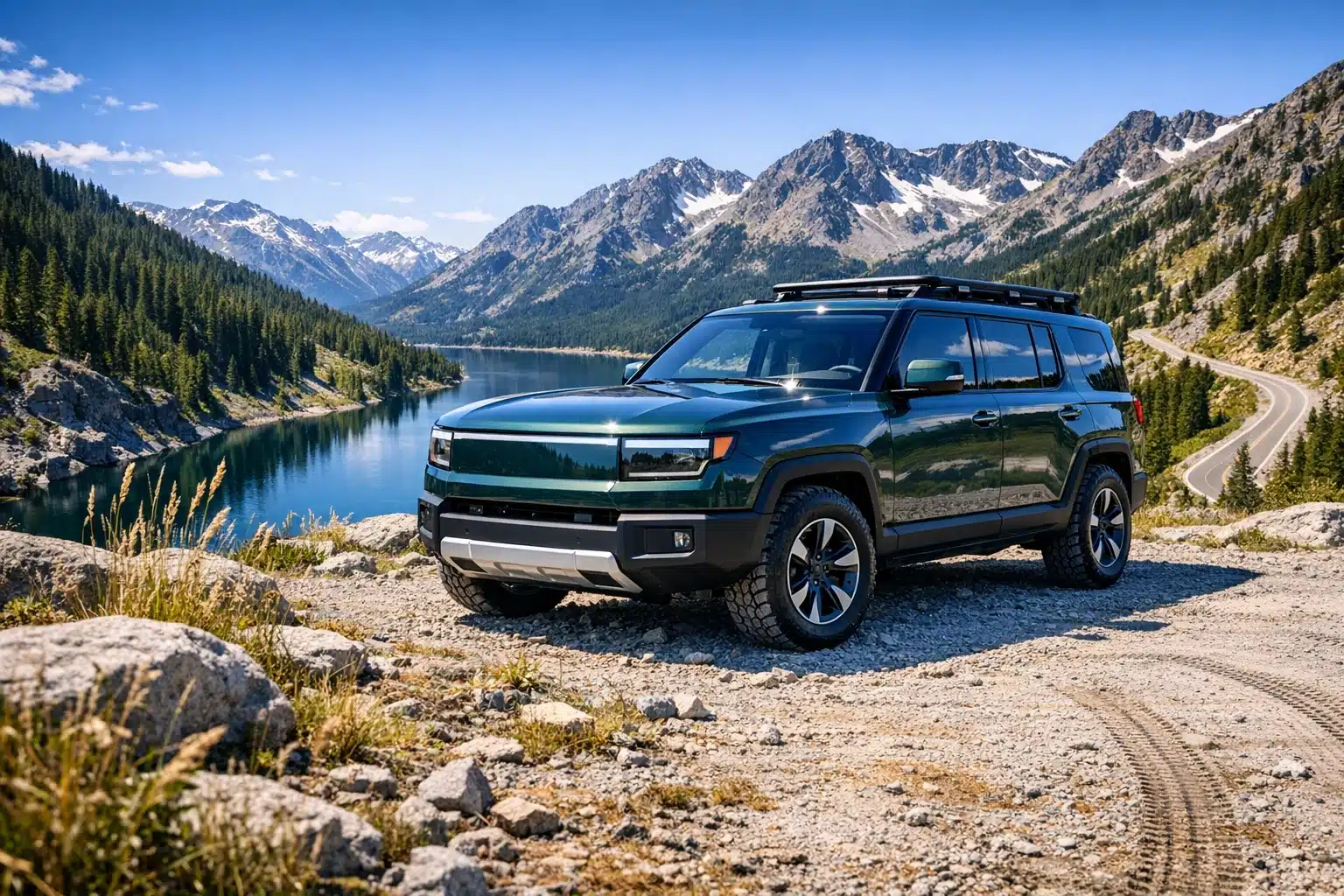
 Artificially generated image
 BYD Leopard 2026 Plug In Hybrid SUV Informational Overview
1. Outline and Introduction: Why the BYD Leopard 2026 Matters
BYD’s Leopard line has become one of the most closely watched signs of how the SUV market is changing, because it tries to blend electric-era efficiency with the bold, adventure-ready look many buyers still love. A 2026 plug-in hybrid Leopard is relevant well beyond one model launch: it reflects rising demand for long range, flexible charging, smarter software, and genuine all-terrain confidence in a single vehicle. For drivers who want fewer compromises, that mix deserves a careful look.
This article follows a simple outline so readers can move from big-picture context to buying relevance without getting lost in rumor. Key points include: • where the Leopard name fits inside BYD’s growing brand strategy • what current Leopard products suggest about design and platform direction • how a plug-in hybrid system could balance electric commuting with long-distance travel • which cabin, safety, and practicality features matter most in daily life • how a 2026 Leopard may compare with rival electrified SUVs once price and regional availability come into focus.
The importance of this topic lies in timing. The global SUV market is no longer split into neat camps where buyers choose either a traditional fuel-powered off-roader, a soft urban crossover, or a full battery-electric family vehicle. Plug-in hybrids now sit in a useful middle lane. They let owners complete many short trips on electricity, then rely on gasoline for extended travel, cold-weather flexibility, or remote routes where charging stations still feel sparse. For a brand like BYD, which has built strong momentum in batteries, power electronics, and electrified drivetrains, the Leopard concept is more than styling theater. It is a strategic answer to customers who want toughness without surrendering efficiency.
There is one necessary caution. As of now, detailed 2026 market-by-market specifications are not fully standardized in public form, and BYD has a history of adjusting names, trims, and equipment according to region. The Leopard line is also closely associated with Fangchengbao in China, so buyers may encounter different translations or branding references. That means the smartest way to discuss a 2026 Leopard is to combine confirmed brand direction with informed comparison, not treat every circulating number as a guarantee. In other words, this is an informational overview, not a launch brochure.
Even with that caveat, the subject is worth serious attention. Current Leopard models already show that BYD is not interested in building anonymous utility vehicles. The brand’s approach suggests a future SUV that aims to feel modern, capable, and slightly dramatic in the best sense. If the 2026 plug-in hybrid version develops along the trajectory already visible, it could become relevant to families, outdoor enthusiasts, company-car drivers, and early adopters who want one vehicle that can play several roles well.
2. Brand Context, Exterior Identity, and Platform Direction
To understand what a BYD Leopard 2026 plug-in hybrid SUV might represent, it helps to look at the logic of the Leopard family itself. BYD has grown from being known mainly as a battery and EV player into a multi-layered automotive group with different sub-brands serving different audiences. In that structure, Leopard is positioned as the tougher, more adventurous face of the company. It is not simply trying to copy a luxury SUV formula, and it is not chasing the plain efficiency-first image of a commuter crossover either. The idea is more cinematic than that: boxy proportions, stronger off-road cues, more visual muscle, and hardware that suggests the vehicle can leave the city without losing its composure.
Existing Leopard products, especially those already shown in China, indicate several design themes that may carry into a 2026 plug-in hybrid SUV. Those themes include: • a squared-off silhouette that emphasizes presence rather than slipperiness • short overhangs and a higher stance that hint at trail readiness • robust cladding and underbody protection details • a modern, screen-heavy cabin paired with traditional SUV visual cues such as grab handles, broad shoulders, and a rear-mounted utility aesthetic. Even when such styling is partly theatrical, it still matters, because buyers in this segment often choose with both logic and emotion. They want the reassurance of capability before they ever reach a gravel road.
Platform direction is equally important. BYD’s broader engineering strategy suggests that Leopard models are meant to go beyond the limits of a normal front-wheel-drive family crossover. That does not automatically mean every 2026 version will target extreme rock-crawling users, but it does suggest an SUV engineered for higher torque, stronger body control, and more serious traction management than a typical suburban runabout. Electric motors are especially useful here because they can deliver immediate torque and precise wheel control, traits that help both brisk on-road performance and low-speed technical driving.
Another reason this matters is market differentiation. Many mainstream electrified SUVs still look rounded, road-focused, and almost interchangeable at a distance. The Leopard brand is trying to stand apart by offering something more architectural. It is the kind of shape that makes a parking lot feel less like a spreadsheet. That style, however, only works if the fundamentals support it. Buyers will want to see solid approach to practical details such as ground clearance, cargo loading, roof utility, and underbody protection, not just a rugged costume. If BYD gets the balance right, the 2026 Leopard could appeal to people who like the visual confidence of traditional off-roaders but also want the efficiency benefits of electrified propulsion.
3. Plug-In Hybrid Powertrain, Range Expectations, and Driving Character
The heart of the BYD Leopard 2026 story is the plug-in hybrid system, because that is where its promise either becomes credible or fades into marketing fog. A plug-in hybrid SUV works best when its electric side is meaningful enough for daily life and its combustion side is competent enough to remove range anxiety on longer trips. BYD has an advantage here because electrified powertrains are not a side experiment for the company; they are central to its identity. In practical terms, that means the Leopard is likely to be judged not only against other plug-in hybrids, but also against full EVs on refinement and against traditional SUVs on durability and range flexibility.
BYD uses several hybrid strategies across its lineup, and the Leopard family appears oriented toward the more performance- and capability-focused end rather than the purely economy-first approach. For readers new to the category, the basic formula is straightforward. A battery large enough for useful electric driving works with one or more electric motors and a gasoline engine. Depending on speed, terrain, and state of charge, the system can run on electricity alone, use the engine as a helper, or blend both sources for stronger output. That arrangement creates several benefits: • quiet, smooth low-speed operation in town • strong initial acceleration thanks to electric torque • better fuel efficiency than a comparable conventional SUV • extended touring range once the battery is depleted.
Current Chinese-market Leopard 5 figures have been widely cited at around 125 km of CLTC electric range and more than 1,200 km of combined range, with very strong power outputs for the class. Those numbers should not be copied directly onto a future 2026 model, and CLTC results often read more generously than WLTP or EPA-style testing. Still, they reveal BYD’s ambition. The company is not treating plug-in hybrid technology as a token compliance measure. It is using a relatively large battery and robust electric assistance to make the SUV feel genuinely electrified in everyday driving.
Driving character is where this setup could become especially attractive. A well-tuned plug-in hybrid Leopard should feel calmer in traffic than a traditional turbo SUV, because electric propulsion removes much of the stop-start fuss. At the same time, it may feel more relaxed on a cross-country trip than a battery-only off-road SUV, since refueling options remain broader in many regions. Off-road, electric torque can help with precise crawling and low-speed control, while regenerative braking may support descending stability in some conditions. Buyers should still watch for real-world details such as battery protection, charging speed, weight, and towing impact on range. Yet if BYD calibrates the system carefully, the 2026 Leopard could occupy a sweet spot that many SUV shoppers have been waiting for.
4. Cabin Technology, Safety Features, and Everyday Practicality
A rugged-looking SUV can win attention in a photograph, but ownership is decided in the cabin and on ordinary roads. That is why the interior and usability side of the BYD Leopard 2026 plug-in hybrid SUV deserve as much attention as the drivetrain. BYD’s recent products have generally shown confidence in software-driven cabins, large displays, and feature-rich equipment lists, and the Leopard line has leaned into that modern approach rather than presenting itself as a stripped-back utilitarian machine. For many buyers, that will be good news. They want the commanding feel of an adventure SUV, but they still expect the conveniences of a contemporary family car.
What should shoppers look for here? The answer goes beyond screen size. A convincing Leopard cabin should combine strong digital functionality with practical physical usability. That means clear climate controls, supportive seats, enough storage for daily clutter, and second-row space that does not punish adult passengers. It also means a layout suited to muddy shoes, child seats, charging cables, backpacks, and the unglamorous objects that define real life. Useful areas to inspect include: • rear-seat legroom and headroom • luggage floor height and spare-wheel packaging • visibility over the shoulder in a boxy body style • charging-port placement • the presence of physical shortcut buttons for off-road and drive-mode settings.
Safety and driver assistance will likely be another major part of the value equation. Modern buyers in this class increasingly expect adaptive cruise control, lane-centering assistance, automatic emergency braking, parking cameras, and a surround-view system. In a large SUV with bold exterior styling, camera quality matters more than people first assume. Tight parking garages, curbside maneuvers, and narrow trails all become easier when the digital visibility tools are good. Some manufacturers also offer underbody or so-called transparent chassis views, which can be genuinely useful in off-road situations, not just flashy showroom tricks.
There is also a broader ownership question hiding behind the gadgets: software maturity. An impressive cabin loses shine quickly if menus are confusing, navigation is poorly localized, voice commands struggle with accents, or over-the-air updates arrive inconsistently. For markets outside China, buyers should pay close attention to language support, smartphone integration, connected services, and service-network readiness. This is where some emerging automotive brands still have to prove themselves. If BYD aligns its hardware strength with polished software and reliable aftersales support, the Leopard could feel far more complete than older rugged SUVs that were strong in mechanical character but weak in day-to-day convenience. The best adventure vehicle is the one that remains easy to live with on a rainy Tuesday, not only dramatic on a mountain backdrop.
5. Competitor Comparisons and Conclusion: Who Should Pay Attention to the Leopard?
The most useful way to judge a BYD Leopard 2026 plug-in hybrid SUV is not to ask whether it will be perfect, but to ask which problems it is trying to solve better than its rivals. In broad terms, it may sit between several categories at once. Against traditional body-on-frame style SUVs, a Leopard plug-in hybrid could offer quieter urban driving, lower fuel use on short trips, and stronger software integration. Against mainstream plug-in hybrid crossovers, it may deliver a more commanding design, better traction, and a stronger sense of occasion. Against full EV SUVs, it could trade some electric purity for easier road-trip logistics and less dependence on ideal charging infrastructure.
That makes comparison especially interesting. A shopper considering something like a Jeep Wrangler 4xe might care about image, off-road credentials, and electrified assistance, but also worry about refinement and daily comfort. A buyer looking at a Mitsubishi Outlander PHEV may appreciate efficiency and family practicality, yet want something with a more robust visual and mechanical identity. Someone cross-shopping a premium plug-in hybrid SUV from Land Rover or another established brand may be attracted by design and capability, but still be sensitive to price and long-term running costs. The Leopard concept becomes compelling if it can bridge these worlds instead of fitting neatly into only one of them.
Of course, a few unresolved questions will matter enormously once final details are announced. Buyers should watch the following closely: • official pricing by market • real-world electric range under local test conditions • DC fast-charging capability, if offered • warranty terms for battery and drivetrain • service access outside major cities • parts support and resale confidence. These are not small footnotes. They often determine whether an exciting new SUV becomes a smart ownership decision or merely an interesting headline.
For the target audience, the conclusion is fairly clear. If you want a conventional, low-drama family SUV, the Leopard may feel too bold. If you want a hard-core expedition machine with no concern for efficiency, it may feel too modern and too electrified. But if you are the kind of driver who commutes during the week, travels far on holidays, likes the idea of trail capability, and wants advanced battery-driven performance without fully committing to an all-electric lifestyle, this is exactly the sort of model worth tracking. The BYD Leopard 2026 plug-in hybrid SUV looks important not because it promises magic, but because it reflects a very real shift in what people now expect from an SUV: versatility, technology, presence, and fewer compromises packed into one increasingly persuasive shape.