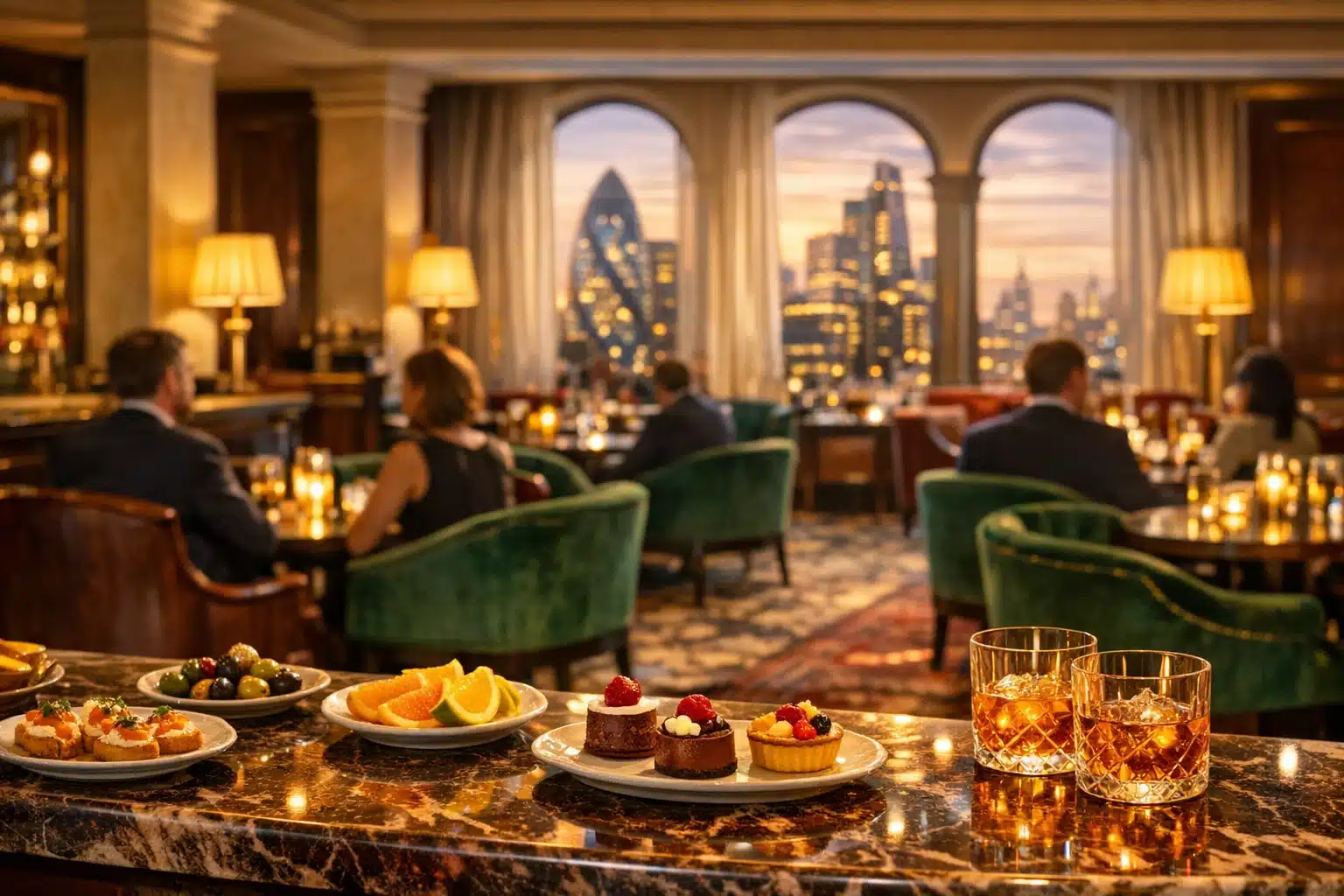
 Artificially generated image
 3-Night All-Inclusive Hotel Stays in London (Last-Minute Prices 2026): What Travellers Are Finding
London is not the classic all-inclusive city, which is exactly why last-minute 3-night deals are drawing so much attention in 2026. Travellers are comparing airport hotels, riverside properties, and package-style offers that bundle meals, drinks, or credits into one easier total. For visitors trying to control costs in an expensive capital, these stays can simplify budgeting and remove some guesswork. This guide looks at what people are actually finding, where prices are clustering, and which offers deserve a closer look.
Outline: How to Read the London All-Inclusive Market in 2026
Before diving into prices, it helps to understand the map. London does not usually behave like destinations where all-inclusive is the default. In cities built around beaches and resort compounds, the concept is simple: one property, one bracelet, one running total. In London, the idea is looser and often more creative. A listing may include breakfast and dinner, a fixed bar allowance, executive lounge access, afternoon tea, or daily dining credit rather than unlimited food and drink. That is why travellers searching at the last minute in 2026 are spending as much time decoding wording as they are comparing nightly rates.
This article follows a practical route through that confusion. It starts by looking at the market reality: why all-inclusive in London is uncommon, which hotel types are more likely to offer it, and why prices can swing dramatically when major events land on the calendar. From there, it moves into the price bands travellers are reporting across different parts of the city, especially when booking only days or a few weeks before arrival.
The guide then breaks down what these packages usually contain in real terms. That matters because a room with breakfast, one set dinner menu, and a limited drinks window can still be excellent value for some visitors, while being poor value for others. Finally, it closes with advice aimed at the people most likely to consider this type of stay.
Here is the route ahead:
• What the phrase all-inclusive usually means in London
• Where 3-night last-minute prices are clustering in 2026
• Which neighbourhoods tend to offer better package value
• How to compare meal plans, credits, and transport trade-offs
• Who benefits most from booking this way
Think of the topic like a London weather forecast: the broad pattern is visible, but the useful decision lives in the small print. A cheap package in the wrong place can become expensive once trains, lunches, and convenience spending pile up. A pricier stay in a business district may quietly save money by covering dinners, drinks, and faster transport into the city. That tension between headline price and real trip cost is the central question of this guide, and it is exactly what travellers are trying to solve.
What Travellers Are Actually Finding: The Market Reality Behind Last-Minute Prices
The first thing travellers are discovering in 2026 is that truly traditional all-inclusive hotel stays remain rare in London, especially in the most central areas. The city’s hotel market is built more around room-only, bed-and-breakfast, or flexible dining than around unlimited board. That is not a flaw so much as a reflection of how London works. Visitors often spend long days outside the hotel, eat in different neighbourhoods, and build their trip around theatre, museums, football, shopping, or business meetings rather than around the property itself.
As a result, last-minute 3-night packages that appear under the all-inclusive label are usually one of several formats. Travellers commonly report finding:
• Full-board style offers with breakfast, lunch, and dinner included, usually at outer-zone or airport-adjacent hotels
• Half-board packages with breakfast plus dinner, more common than full board
• Executive lounge deals that cover breakfast, evening drinks, and snacks
• Room packages with daily restaurant credit instead of unlimited dining
• Bundle rates connected to spa access, afternoon tea, or attraction add-ons
Price-wise, a broad pattern is emerging rather than one fixed chart. Based on traveller reports, booking searches, and how London hospitality typically behaves, 3-night last-minute stays for two adults in 2026 often fall into rough bands such as these:
• Around £450 to £700 total for airport-area or outer-zone properties with breakfast and one additional meal component
• Roughly £700 to £1,050 for four-star offers in quieter districts or better-connected outer neighbourhoods
• About £950 to £1,600 and beyond for central four-star and five-star properties with stronger meal plans, lounge access, or premium inclusions
These are indicative rather than universal numbers. London can change mood quickly. A week with a major exhibition, a concert run, school holidays, or a football calendar surge can push rates up fast. Business-heavy districts, on the other hand, may soften on weekends when corporate demand eases. That is why travellers searching the same city for the same three nights can report very different outcomes.
The other striking discovery is that the cheapest headline offer is rarely the cheapest trip. When lunch is not covered, transport takes longer, and drinks are extra, the savings can dissolve by the second evening. London has a habit of making small daily costs march in quietly and leave a much larger bill behind them.
Area-by-Area Comparison: Where the Better 3-Night Package Value Tends to Appear
Location is where London stops being a list of prices and starts becoming a strategy game. Travellers hunting for last-minute 3-night package deals in 2026 are finding that value often depends less on star rating alone and more on district. Two hotels with similar room quality can feel completely different once transport, meal options, and daily rhythm enter the picture.
Airport zones, especially around Heathrow, continue to appear in many lower-priced package searches. These hotels are more likely to have space for restaurants, lounges, and broader meal offers than compact central properties. For travellers arriving late, leaving early, or planning only one or two major trips into the city, this can work well. The compromise is time. A package can look financially tidy, but if each central outing adds long Tube journeys, the trip may feel more practical than magical.
The City of London and Canary Wharf are another interesting case. They are not usually the first areas leisure visitors imagine, but last-minute weekend prices can be surprisingly competitive because business demand softens outside the workweek. Travellers are often finding modern four-star hotels here with better food-and-beverage inclusions than similarly priced options in the West End. If the goal is a polished base, riverside walks, good transport links, and fewer theatrical room rates, these districts deserve attention.
West End, Covent Garden, Soho, and nearby central zones remain appealing but expensive. If a hotel here advertises an all-inclusive or full-board style offer, the premium is often significant. That does not automatically make it poor value. For visitors who want to step outside and already be in the middle of the action, saving transport time and late-night taxi costs can justify the higher bill. London after dark has its own pull, and being able to drift back to the hotel rather than commute back to it has value that spreadsheets only partly capture.
Greenwich, Stratford, and parts of South Bank-adjacent east London also show up in traveller comparisons. These areas sometimes deliver a useful middle ground:
• Better space than ultra-central locations
• Strong rail or Tube links
• Easier access to event venues
• Rates that can be more forgiving than prime tourist districts
The broad lesson is simple. Do not ask only, “What is included?” Ask, “Included where?” A dinner-inclusive stay in an inconvenient location may work for a quiet couple’s break, but not for a first-time visitor who wants to be out until midnight. London rewards honest trip planning. The neighbourhood should fit the holiday, not just the discount banner.
What “All-Inclusive” Usually Covers in London, and How to Judge Real Value
If there is one lesson travellers keep learning, it is this: in London, the phrase all-inclusive often needs translation. Unlike resort destinations where the term usually signals near-total on-site spending coverage, London packages can vary widely in scope. Reading the details is not optional; it is the whole game.
A typical 3-night package in 2026 may include breakfast every day and dinner on one or more evenings. Another might offer a set monetary credit to spend in the hotel restaurant or bar. Higher-end properties may include executive lounge access, which can quietly be one of the best value features in the city. A good lounge can mean breakfast, tea or light daytime refreshments, and evening drinks with canapés. That is not the same as open-ended dining, but for many travellers it materially reduces the daily budget.
There are also packages that sound generous until the details arrive. Common limitations include:
• Dinner restricted to a fixed menu rather than the full restaurant offering
• Drinks limited to house wine, a short serving window, or non-alcoholic options
• Credits that do not fully cover a main course in a more expensive restaurant
• Blackout dates for some inclusions
• Advance reservation requirements for dining or spa access
Travellers comparing deals last minute are increasingly checking not just the total rate but the replacement cost of what is included. In central London, breakfast for two at a hotel can easily be a meaningful daily expense. Dinner and drinks can add much more, especially in four-star and five-star settings. A package that covers even part of those costs can be worthwhile if you would have paid for similar quality anyway. If the hotel food is weak, badly timed, or too formal for your plans, the inclusion may have theoretical value but little real usefulness.
There are also hidden gains and losses outside the meal plan. London hotels generally do not rely on resort fees in the way some other markets do, which is a relief. Still, travellers should account for:
• Transport costs from the hotel into central areas
• Service charges on some dining extras
• The price gap between included meals and what you would actually prefer to eat
• Time lost returning to the property just to “use” an included benefit
The best-value package is usually not the one with the longest feature list. It is the one that matches your natural travel habits. If you like big breakfasts, one relaxed hotel dinner, and an easy evening drink before bed, a well-priced package can feel wonderfully efficient. If you want spontaneous meals in Borough Market, Soho, and Shoreditch, a rigid board basis may feel like a polite trap dressed as convenience.
Conclusion: Who These 3-Night London Packages Suit Best, and How to Book Smarter
For the right traveller, a 3-night all-inclusive or near-all-inclusive hotel stay in London can make a lot of sense in 2026. Not because London has suddenly turned into a resort city, but because budgeting in the capital has become a serious part of trip planning. When travellers find a late-booked deal that sensibly combines room, breakfast, some dining, and perhaps drinks or lounge access, the appeal is obvious: fewer moving parts, a clearer spending limit, and less friction at the end of a long sightseeing day.
These stays tend to suit a few groups particularly well. Couples on a short city break often like them because three nights is just long enough to enjoy one or two hotel-based evenings without feeling locked in. Families can benefit when breakfast is covered and one main meal is already paid for, since food costs add up quickly in London. Business-leisure travellers, especially those staying over a weekend in commercial districts, may find excellent value when hotels lower room rates but keep premium inclusions attached. First-time visitors can also appreciate the certainty of knowing that part of the trip is prepaid.
They are less ideal for travellers who treat London as an open-air dining trail. If your dream trip involves chasing bakery openings in the morning, market food at lunch, and a different neighbourhood restaurant every evening, a package rate may bundle services you will barely use. Flexibility has value too, and sometimes the best deal is simply a sharp room-only rate in the right place.
Before booking, a short checklist helps:
• Confirm exactly which meals are included and on which days
• Check whether drinks are covered, capped, or excluded
• Measure transport time to the sights you care about most
• Compare weekend and midweek prices across several districts
• Look at cancellation terms, especially for true last-minute bookings
• Read recent guest reviews for food quality, not just room comfort
The clearest takeaway for travellers is this: in London, the winning package is usually the one that reduces uncertainty rather than the one that promises everything. A smart 3-night deal can soften the cost of a famously expensive city and make the trip feel smoother from arrival to checkout. Book with open eyes, match the inclusions to your habits, and London can reward the practical planner just as much as the spontaneous wanderer.