Five Top-Rated Colleges in New Jersey
Outline of the article
– Introduction and how we evaluated New Jersey colleges
– Profiles and comparisons: five top-rated New Jersey institutions
– Practical takeaways on academics, affordability, outcomes, and campus culture
– Conclusion with next steps and decision frameworks
Introduction, Methodology, and What “Top-Rated” Really Means
New Jersey’s higher education landscape is compact yet remarkably diverse: within a morning’s drive, you can pass from tranquil, tree-lined colleges to bustling research hubs that hum with laboratories, start-up incubators, and clinical partnerships. For students and families, “top-rated” is not a single score—it’s a mosaic of factors that, taken together, suggest strong value and high-impact learning. In this guide, we synthesize publicly available data from sources such as state dashboards and national education datasets, plus widely observed trends in admissions, student outcomes, and campus resources. Our goal is to provide clear, comparable snapshots while recognizing that the right fit depends on goals, preparation, and budget.
To keep this review practical and brand-neutral, we highlight five institutions using descriptive labels rather than names. Each profile focuses on the same core elements: academic strengths, learning environment, affordability, outcomes, and location advantages. Where possible, we describe typical ranges (for example, student–faculty ratios or graduation rates) rather than precise figures that can shift year to year. We also weave in “who thrives here” notes so readers can quickly sense alignment with their priorities.
How we evaluated schools at a glance:
– Academic experience: curriculum breadth or depth, lab and studio access, capstones, and mentorship intensity.
– Outcomes: four- and six-year completion, internship prevalence, early-career trajectories, and graduate study pathways.
– Affordability: net price patterns for in-state and out-of-state students, aid culture, and time-to-degree.
– Student life and support: advising, learning centers, career services, and community engagement.
– Location and access: transit links, proximity to research corridors, hospitals, and industry clusters.
What’s ahead (our five New Jersey standouts):
– College A: a historic private research university in central New Jersey with exceptionally low student–faculty ratios and far-reaching research opportunities.
– College B: the state’s flagship public research university in the New Brunswick–Piscataway corridor, known for scale, breadth, and robust in-state value.
– College C: a STEM-focused private institute on the Hudson waterfront, where project studios and industry ties underpin hands-on learning.
– College D: a public liberal arts college in Mercer County that blends small-class attention with strong professional pathways.
– College E: a comprehensive public university in South Jersey notable for applied learning and rapid campus growth.
Consider this a field guide rather than a verdict. As you read, note where your interests land on a spectrum: intimate versus expansive, theory-forward versus project-based, and campus-centric versus city-embedded. That spectrum—more than any ranking—will help you read the signals that point to a strong, personal match.
College A vs. College B: Intimate Research Intensity or Expansive Public Opportunity
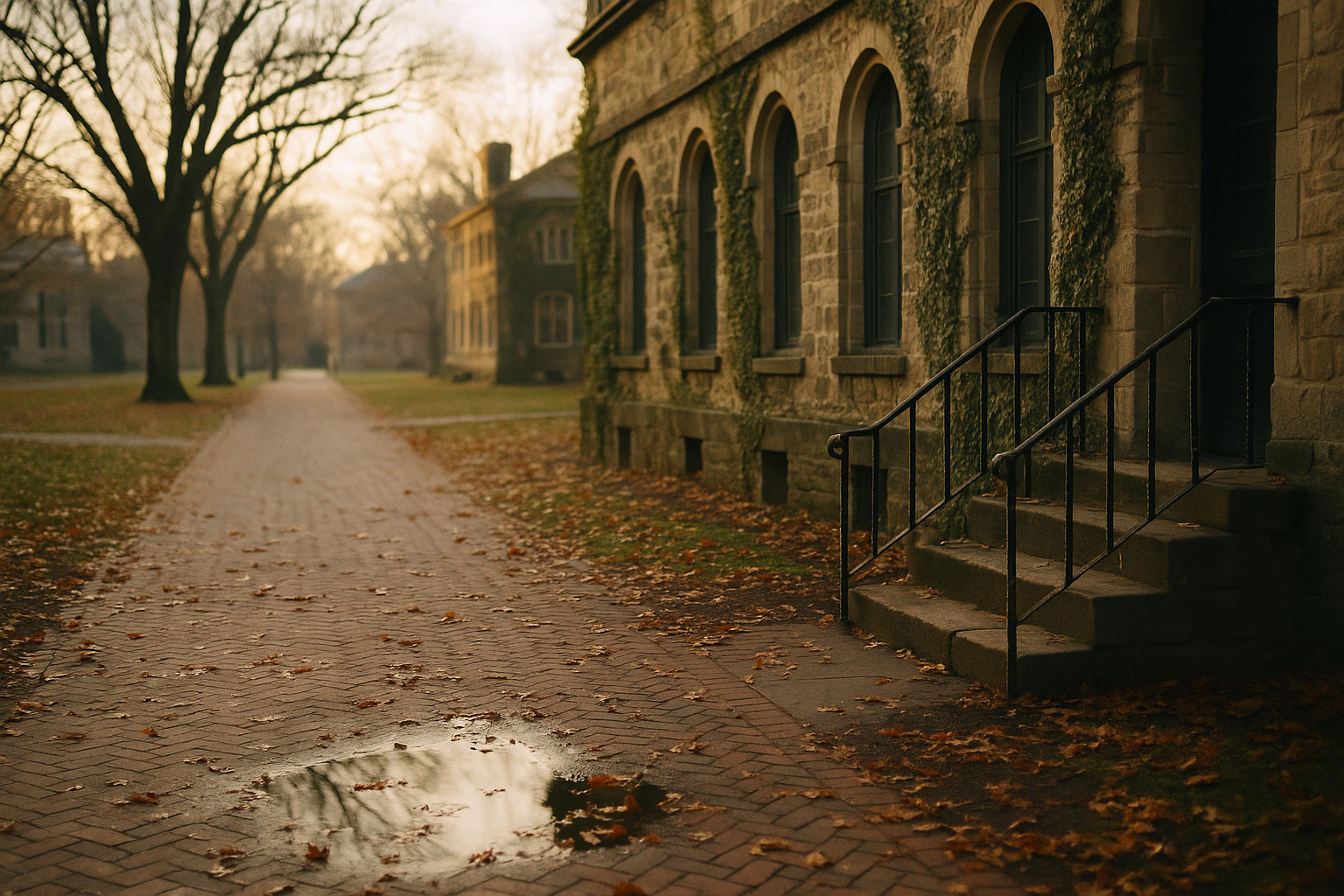
College A, a centuries-old private research campus set amid quiet streets and mature oaks, feels deliberately scaled. Courses often run small, and seminar-style instruction is common even outside the humanities. Students describe close access to faculty labs and archives, with undergraduates joining research groups early through clearly marked pathways—think first-year research seminars, funded summer projects, and independent study sequences. The environment rewards curiosity: it’s normal to see mathematicians and musicologists share a café table and leave with a collaborative idea. Outcomes reflect that intensity; four-year graduation rates are typically high, and alumni networks span academia, public service, and industry leadership. Sticker price is substantial, but for many families, need-based grants significantly lower net cost, especially at modest income levels. The upshot is a high-support setting where time-to-degree is efficient and post-graduation plans are often secured months before commencement.
College B, by contrast, is the state’s flagship public research university: wide boulevards, multiple campuses linked by buses, and academic options that read like an encyclopedia. It serves tens of thousands of undergraduates and offers hundreds of majors, minors, and certificates—including specialized tracks that would be rare at a smaller school. The scale brings advantages: an expansive roster of labs, clinical partners, cultural centers, and student organizations, plus advising tailored to major pathways and honors cohorts. For in-state students, the value proposition is compelling; tuition aligned with state support and plentiful commuter, on-campus, and near-campus housing options keep costs comparatively manageable. Completion metrics vary across colleges within the university, but structured advising, learning centers, and academic maps have led to steady improvements in four- and six-year outcomes. Career services leverage the region’s economy, with internships and co-ops available in pharmaceuticals, finance, media, logistics, and public policy across central New Jersey and nearby metro areas.
How to choose between the two:
– Seek College A if you want a tightly mentored, research-forward undergraduate experience with deep access to faculty and facilities across disciplines.
– Opt for College B if you prefer a comprehensive menu of programs, vibrant public-university life, and strong in-state affordability coupled with metropolitan internships.
– Consider class size tolerance: College A trends intimate; College B mixes small honors seminars with larger gateway courses.
– Think about community feel: College A’s town-and-gown vibe versus College B’s multi-campus energy.
Both colleges deliver strong outcomes, but they orchestrate learning differently. The decision often comes down to whether you want depth within a curated environment or breadth inside an engine of opportunity.
College C and College D: Project Studios on the Water vs. Public Liberal Arts Strength
College C sits on a hillside above the Hudson, where you can watch the morning haze lift from the river and slip into glass-walled studios that hum with 3D printers, wave tanks, and fabrication tools. It is unabashedly STEM-centered. Engineering, computing, and design degrees anchor the catalog, and team-based projects are stitched into the curriculum from the first year. Co-ops and internships are common—sometimes required—and the proximity to regional industry gives students a crisp runway into applied research and production environments. Class sizes skew modest, and many lab courses double as portfolio builders. Early-career outcomes in technical fields are consistently strong, helped by recurring employer showcases and alumni mentors who return to campus to staff design reviews. Costs can be significant; however, merit-based aid is awarded competitively, and co-op earnings can offset expenses over multi-term placements. Students who thrive here tend to enjoy building things, iterating quickly, and learning by doing under real-world constraints.
College D offers a different formula: a public liberal arts focus wrapped in a residential campus known for small classes and faculty accessibility. Its general education sequence emphasizes writing, quantitative reasoning, and civic learning, while majors in areas like teacher preparation, business, nursing, and the sciences connect liberal learning to direct practice. Advising is hands-on; first-year seminars and learning communities create tight cohorts that often persist to graduation. Four-year completion is a point of pride, frequently outpacing many public peers nationwide. Internship pipelines run through state agencies, schools, and regional employers, with capstones that ask students to synthesize theory, ethics, and application. For in-state families, the cost profile is attractive, and time-to-degree efficiency further improves value. The campus sits within reach of both suburban internships and larger metro opportunities, enabling students to pursue fieldwork during the week and research or service projects on weekends.
Comparing the two:
– College C is ideal for project-driven learners who want structured co-ops, industry adjacency, and a toolkit-first approach to problem solving.
– College D suits students who value seminar dialogue, close mentorship, and a mission that emphasizes leadership, community engagement, and professional readiness.
– Facilities at College C center on prototyping, testing, and code; at College D, you’ll find simulation labs, collaborative studios, and teaching classrooms that mirror real workplaces.
– Both emphasize outcomes, but they define preparation differently: College C through technical portfolios and employer design critiques; College D through integrative capstones and supervised fieldwork.
In short, one campus feels like a workshop with a skyline view; the other like a conversation that steadily becomes a career plan. Either can be outstanding when matched to the right student temperament and ambitions.
College E: A South Jersey Hub for Applied Learning and Momentum
Head south and you reach College E, a comprehensive public university where cranes and fresh brick hint at a decade of growth. This is a place that leans into change: new academic buildings, modern residence halls, and maker spaces have expanded capacity while keeping class sizes reasonable. The curriculum spans engineering, business, communications, education, the arts, and health-related fields, with cross-disciplinary projects encouraged by design. Many programs embed experiential milestones—client projects, clinics, practicums, and lab-based problem solving—so that by senior year, portfolios show both breadth and depth. Partnerships with regional employers and health systems produce steady internship demand, and capstone showcases draw recruiters from across South Jersey and the broader mid-Atlantic.
From an affordability standpoint, College E often presents an appealing equation for in-state students. Tuition aligns with public-mission goals, and scholarship opportunities are tied to academic performance, leadership, and, in some programs, community service. The campus invests in advising and tutoring centers that extend hours into evenings and weekends, acknowledging that many students balance work and family obligations. Completion metrics have improved alongside infrastructure and student support additions, with four-year rates rising and time-to-degree shortened through proactive scheduling, winter and summer terms, and guided pathways.
Location matters here. College E’s reach includes internships in nearby cities, manufacturing corridors, creative agencies, school districts, and healthcare networks. Weekend trips to coastal environments support field research, environmental monitoring, and arts programming, adding compelling dimensions to science and humanities curricula. Student life feels collaborative rather than competitive, with a culture that normalizes asking for help, meeting in project rooms, and testing ideas without fear of missteps.
Who tends to thrive:
– Students who prefer hands-on, applied learning with clear ties to regional industries.
– Learners seeking a public-university price point with steadily modernizing facilities.
– Community-oriented students who value leadership opportunities in clubs, service initiatives, and peer mentoring.
– Transfers and adult learners who benefit from flexible scheduling and supportive advising structures.
College E embodies momentum: not a finished product, but a campus that keeps adding capacity, refining student services, and widening its opportunity lanes. For many applicants, that combination—plus a practical route to internships—adds up to a compelling value.
Conclusion: Turning Comparisons into a Confident New Jersey Shortlist
Five different strengths emerged across our New Jersey tour. College A showcases close-quarters research and mentorship; College B provides scale and a public value proposition with metropolitan access; College C builds engineers and designers through iterative, team-based making; College D proves that a public liberal arts mission can deliver small-class attention and timely graduation; and College E demonstrates how applied learning and institutional momentum can open doors across South Jersey’s economy. The right choice depends less on broad reputations and more on how each ecosystem aligns with your goals, finances, and learning style.
Here’s a simple decision framework:
– Start with outcomes: examine four- and six-year completion, internship prevalence, and early-career trajectories in your intended major.
– Map fit to daily life: probe class sizes, lab and studio access, advising capacity, and the transit or housing reality you’ll live with.
– Run net price scenarios: use each school’s calculator and compare time-to-degree assumptions; an on-time graduation can materially lower total cost.
– Test the vibe: visit classes if possible, speak with students in your major, and review syllabi to see how theory balances with practice.
If you are still unsure, pilot the experience: attend a summer bridge, register for a campus maker workshop or writing seminar, or shadow a lab meeting. You’re not just picking a name on a hoodie—you’re choosing a learning architecture, a community, and a set of habits that will carry into your first roles after graduation. With a clear-eyed look at academics, outcomes, affordability, and fit, New Jersey’s top-rated colleges offer distinct yet equally viable routes to a fulfilling degree. Your next step is to sketch your priorities, run the numbers, and visit with intention; the right campus will feel less like a brochure and more like a plan you can start living.


